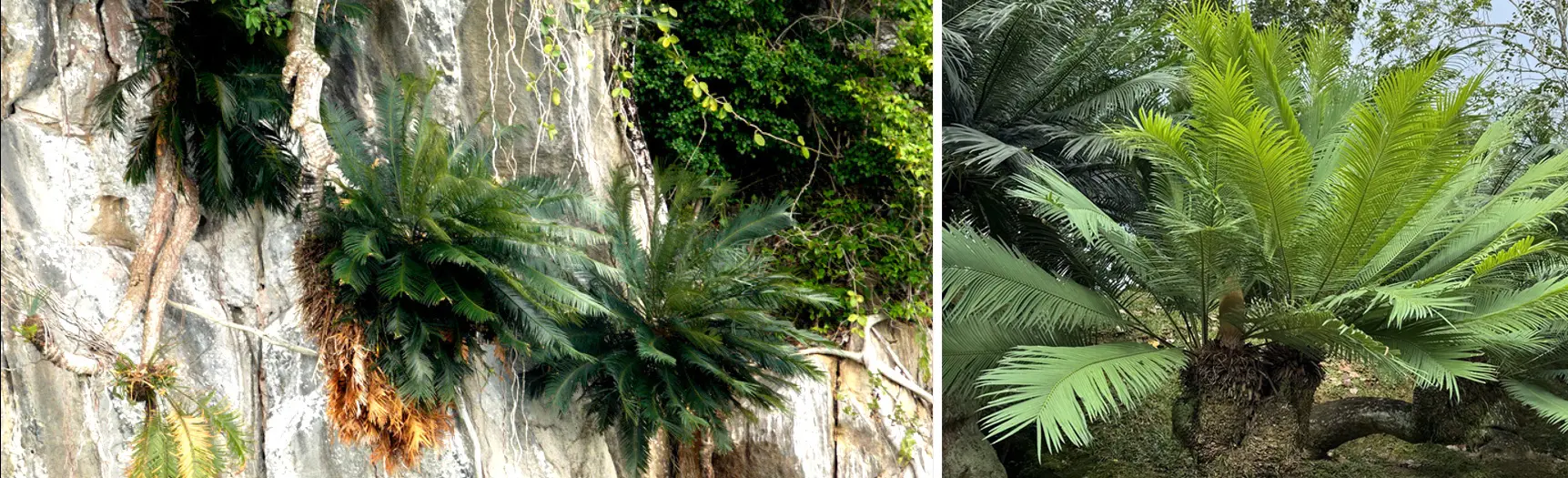
Cycads are among the oldest seed plants on Earth, having thrived for over 280 million years. Often mistaken for palms or ferns, these gymnosperms predate the dinosaurs and have survived multiple mass extinctions. In Langkawi, the Cycas clivicola stands as a testament to biological resilience, clinging to the sheer limestone and sandstone cliffs of the archipelago.
BIOLOGICAL ANTECEDENTS
Cycads are "living fossils" that provide a direct link to the flora of the Jurassic and Triassic periods.- Gymnosperms: Unlike flowering plants, cycads are gymnosperms, meaning they produce "naked seeds" typically housed in large, woody cones.
- Slow Growth: These plants are known for their extremely slow growth rates and incredible longevity, with some individuals estimated to be hundreds of years old.
- Symbiotic Relationship: Cycads possess specialized "coralloid roots" that host cyanobacteria. This symbiosis allows the plant to fix nitrogen from the air, enabling it to survive in the nutrient-poor soils of Langkawi’s rocky outcrops.
CYCAS CLIVICOLA: THE CLIFF-DWELLER
In the Langkawi UNESCO Global Geopark, the Cycas clivicola is a flagship botanical species specifically adapted to the island's karst and Cambrian landscapes.- Extreme Adaptation: This species is found clinging to vertical limestone cliffs and sandstone ridges, where few other plants can survive. Its robust trunk and waxy, spear-like fronds are designed to withstand high salt spray and intense tropical sun.
- Geological Indicator: The presence of Cycads on the Machinchang and Kilim formations highlights the ancient ecological continuity of these landscapes.
- Toxicity: As a defense mechanism against herbivores, all parts of the cycad contain neurotoxins and carcinogenic compounds, making them virtually inedible to most wildlife.
CONSERVATION STATUS
While they have survived millions of years, many cycad species are now among the most threatened plants globally due to habitat loss and illegal poaching for the ornamental trade.- Protection: Under CITES regulations and local Geopark management, the collection of wild cycads is strictly prohibited. Protecting their cliff-side habitats is crucial for the survival of Langkawi's unique populations.
EXPERIENCE LANGKAWI’S PREHISTORIC LANDSCAPES
Witness Ancient Flora & Fauna: Discover the Cycas clivicola and other prehistoric species in their natural habitat. Our expert naturalists will guide you through the evolutionary wonders of Langkawi's UNESCO Global Geopark.
Choose Your Expedition:
- Explore the ancient mangroves: Langkawi UNESCO Geopark Mangrove Cruise
- Trek the 130-million-year-old rainforest: Machincang Rainforest Trekking
General Inquiries & Bookings:
Email: junglewalla@gmail.com
WhatsApp Hotline: +60 19 225 2300