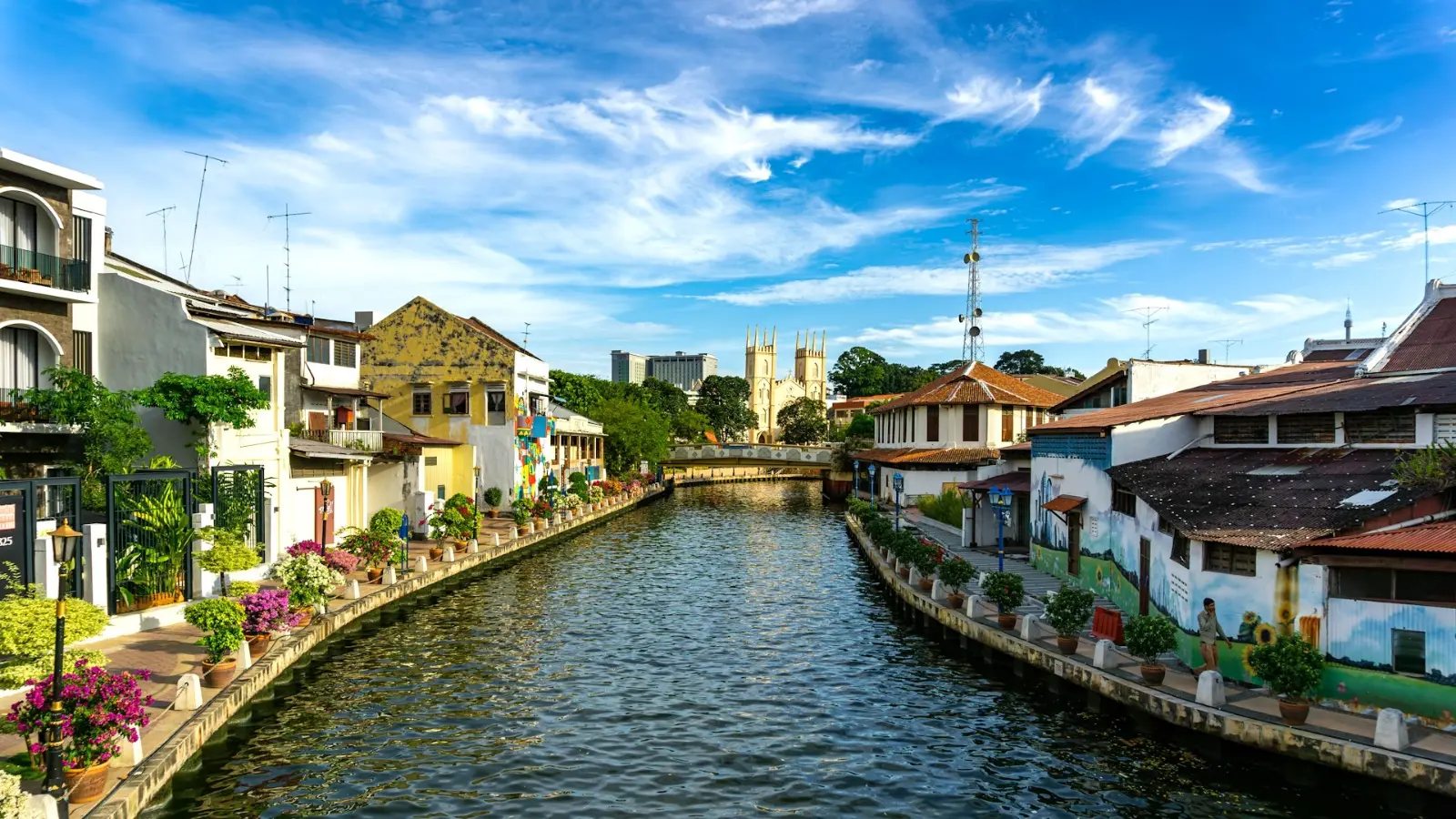
Melaka is the soul of Malaysia’s history. Once a powerful maritime empire and a thriving entrepôt connecting the East and West, it is now a UNESCO World Heritage site. Its unique identity is shaped by a rich tapestry of Malay, Chinese, Portuguese, Dutch, and British influences, visible in its architecture, traditions, and world-renowned Peranakan cuisine.
HISTORICAL LANDMARKS & UNESCO HERITAGE
- The Stadthuys & Red Square: Built in 1650, this is the oldest surviving Dutch building in the East. Its terracotta-red walls are the iconic face of Melaka's colonial heritage.
- A Famosa & St. Paul’s Hill: Explore the remains of the Portuguese fortress built in 1511 and the ruins of St. Paul’s Church, offering a panoramic view of the Melaka Straits.
- Baba & Nyonya Heritage Museum: A deep dive into the opulent lifestyle of the Straits Chinese (Peranakan), showcasing intricate woodwork, traditional costumes, and heirloom antiques.
- Jonker Street (Jalan Hang Jebat): The heart of Chinatown, famous for its night market, antique shops, and the historic Cheng Hoon Teng Temple—the oldest traditional Chinese temple in Malaysia.
NATURE & COASTAL ECOSYSTEMS
Beyond the historic center, Melaka holds significant natural treasures often overlooked by casual tourists.
- Melaka River: Once the "Venice of the East," the river is now a central feature for scenic cruises. It also serves as an urban habitat for various waterbirds and monitor lizards.
- Pulau Besar: A serene island known for its sandy beaches and mystical legends. It offers opportunities for swimming, light trekking, and birdwatching away from the city crowds.
- Padang Temu & Mangroves: The coastal mangroves are vital nurseries for marine life and stopover points for migratory shorebirds along the East Asian-Australasian Flyway.
- Turtle Management Centre (Padang Kemunting): A critical conservation site for the endangered Hawksbill turtles, which nest on Melaka's sandy shores.
GASTRONOMY: A CULTURAL MELTING POT
Melaka is a culinary capital, famous for its bold and distinct flavors.
- Peranakan (Nyonya) Cuisine: A fusion of Chinese ingredients with Malay spices. Highlights include Laksa Nyonya, Ayam Pongteh, and the iconic Cendol.
- Portuguese Settlement: Visit for authentic Kristang dishes like "Devil’s Curry" and grilled spicy fish at the heart of the Portuguese-Eurasian community.
VISITOR INFORMATION
- Location: Approximately 147 km south of Kuala Lumpur and 245 km north of Singapore.
- Accessibility: Well-connected via the North-South Expressway. The historic center is best explored on foot or via the colorful trishaws (Beca).
Experience Malaysia’s Premier Nature Destinations
Langkawi Signature Nature Tours:
Planning a visit to the Jewel of Kedah? Explore Southeast Asia’s first UNESCO Global Geopark with the archipelago's leading naturalists. From rainforest treks to ethical mangrove boat safaris, we provide world-class field interpretation.
Explore Tours: Langkawi Nature Expeditions
General Reservations & Inquiries:
Hotline (WhatsApp): +60 19 225 2300
Email: junglewalla@gmail.com
Corporate & Media:
Azri Hussein (Operational Manager)
WhatsApp: +60 19 592 2300