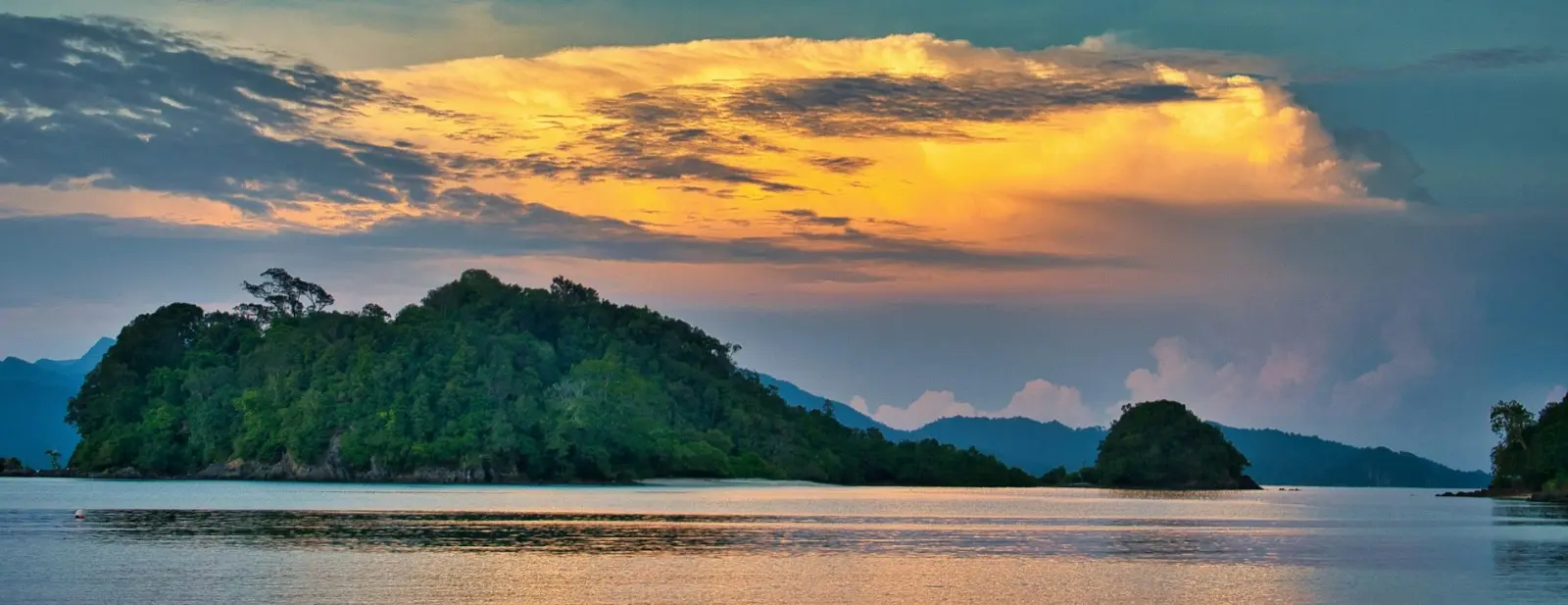
Langkawi is an archipelago of 99 islands located in the Andaman Sea. Renowned for its ancient geological formations dating back over 550 million years, it was designated as a UNESCO Global Geopark in 2007. The island offers a unique convergence of primary rainforests, dramatic karst landscapes, and extensive mangrove systems, making it one of the most significant biodiversity hotspots in the region.
GEOLOGICAL & ECOLOGICAL SIGNIFICANCE
- Machinchang Cambrian Geoforest Park: Home to the oldest rock formations in Southeast Asia. This rugged mountain range is dominated by sandstone and shale, providing a habitat for specialized flora and fauna across its 550-million-year-old terrain.
- Kilim Karst Geoforest Park: A breathtaking landscape of vertical limestone cliffs, hidden caves, and ancient mangrove forests. This ecosystem is a vital sanctuary for Brahminy Kites, White-bellied Sea Eagles, and a variety of estuarine wildlife.
- Dayang Bunting Marble Geoforest Park: Famous for its freshwater lake and unique marble formations, this area showcases the island's mid-paleozoic geological history amidst lush coastal forests.
WILDLIFE & BIODIVERSITY
Langkawi's isolation from the mainland has resulted in a rich concentration of wildlife, including several endemic and rare species.
- Avifauna: With over 260 species of birds recorded, Langkawi is a premier birdwatching destination. Notable species include the Great Hornbill, Brown-winged Kingfisher, and the migratory Mountain Hawk-Eagle.
- Primates & Mammals: The rainforests are inhabited by Dusky Leaf Monkeys, Flying Lemurs (Colugos), and the endemic Langkawi Slow Loris.
- Marine Life: The surrounding Andaman Sea and the Pulau Payar Marine Park support diverse coral reefs, providing a sanctuary for Black-tip Reef Sharks and countless reef fish species.
CULTURAL HERITAGE & LEGENDS
Langkawi’s natural beauty is deeply intertwined with its rich folklore. Sites like Makam Mahsuri and the legendary tales of Tasik Dayang Bunting offer insights into the island’s social history and the traditional Malay belief systems that have protected its landscapes for generations.
PRACTICAL INFORMATION
- Access: Daily direct flights connect Langkawi International Airport (LGK) to Kuala Lumpur, Singapore, and Penang. Ferry services operate from Kuala Perlis, Kuala Kedah, and Satun (Thailand).
- Climate: Langkawi enjoys a tropical climate. The best time for nature exploration and birdwatching is during the dry season from December to April, although the island is a year-round destination.
- Getting Around: Car and scooter rentals are the most efficient ways to explore the island, while e-hailing services are widely available in the main hubs of Kuah and Pantai Cenang.
Experience the Magic of Langkawi
Langkawi Signature Nature Tours:
Now that you’ve discovered the rich history and unique geography of our archipelago, it’s time to see it for yourself. Join our professional naturalists for an immersive journey into Langkawi’s pristine rainforests and mangroves.
Book Your Expedition: View Langkawi Tours
General Reservations & Inquiries:
Hotline (WhatsApp): +60 19 225 2300
Email: junglewalla@gmail.com
Corporate & Media Inquiries:
Azri Hussein (Operational Manager)
WhatsApp: +60 19 592 2300