Nature Education | Wildlife Ethics & Field Guide
Langkawi’s isolation from the mainland has allowed for the evolution of specialized wildlife and the preservation of rare species. Beyond their aesthetic appeal, these creatures are essential components of the island’s ancient rainforest and mangrove ecosystems. Understanding their biology and habitat is the first step toward their conservation.
THE CHARISMATIC SPECIES
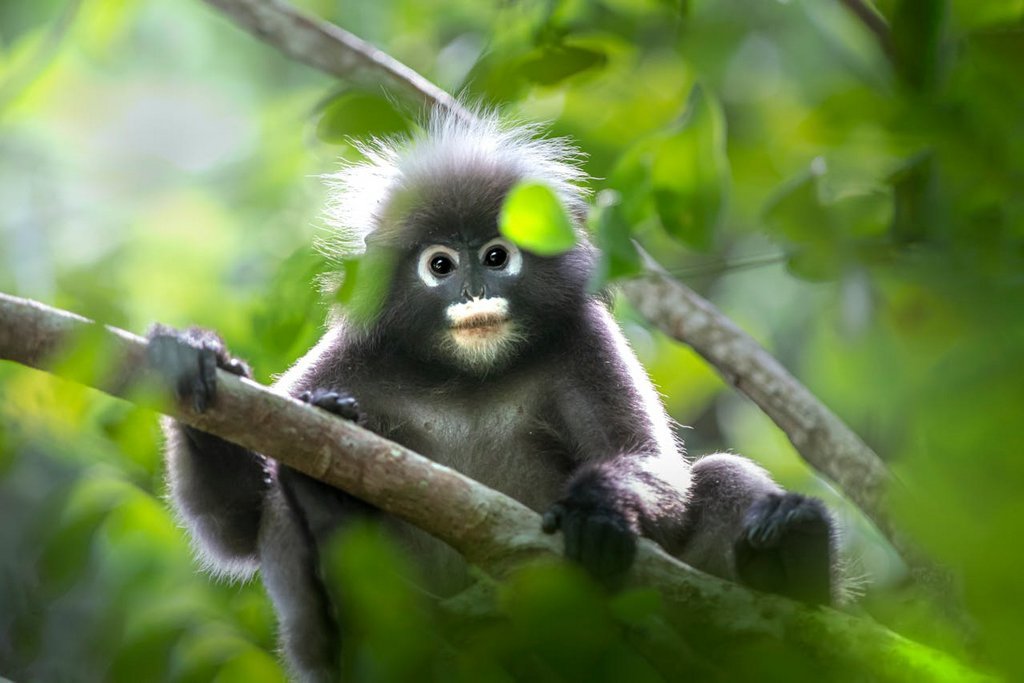
- Dusky Leaf Monkey (Trachypithecus obscurus): Often recognized by the white rings around their eyes and their distinctive orange-colored infants. These arboreal primates are primarily folivorous, feeding on young leaves within the high canopy of Machinchang and Raya forests.
- Sunda Colugo (Galeopterus variegatus): Neither a lemur nor capable of true flight, the Colugo is a master of gliding. Using a specialized skin membrane (patagium), they can glide over 100 meters between trees. They are a nocturnal flagship species for the health of Langkawi’s primary forests.
- Oriental Pied Hornbill (Anthracoceros albirostris): The most visible of Langkawi’s hornbill species and a critical seed disperser. Their unique nesting behavior, where the female is sealed inside a tree hollow during the breeding season, is a testament to their complex survival strategy.
- Slow Loris (Nycticebus coucang): A shy, nocturnal primate with large, light-gathering eyes. While they appear slow, they are efficient predators and one of the world's few venomous mammals, possessing a specialized gland near their elbows.
OBSERVATION ETHICS: THE GOLDEN RULES
To ensure these species continue to thrive, JungleWalla adheres to strict wildlife observation protocols during every expedition:
- Maintain Distance: Use binoculars or high-quality optical equipment to observe animals from a distance. Never approach, touch, or attempt to feed wild animals, as it disrupts their natural diet and behavior.
- No Flash Photography: Especially for nocturnal species like the Colugo and Slow Loris, flash photography causes extreme stress and temporary blindness.
- Stay Silent: Loud noises cause unnecessary stress and will likely cause the animals to flee.
- Habitat Integrity: Strictly follow established trails to prevent habitat fragmentation and soil compaction around critical nesting and feeding trees.
EXPLORE LANGKAWI’S WILDLIFE
Ready to witness Langkawi's incredible biodiversity through the eyes of professional conservationists? Join our expert naturalists on a guided expedition to see these unique species in their natural, undisturbed environment.
Featured Wildlife Expeditions:
- Diurnal discovery: Morning Rainforest Walking
- Nocturnal wonders: Langkawi Rainforest After Dark
General Inquiries & Bookings:
Email: junglewalla@gmail.com
WhatsApp Hotline: +60 19 225 2300