
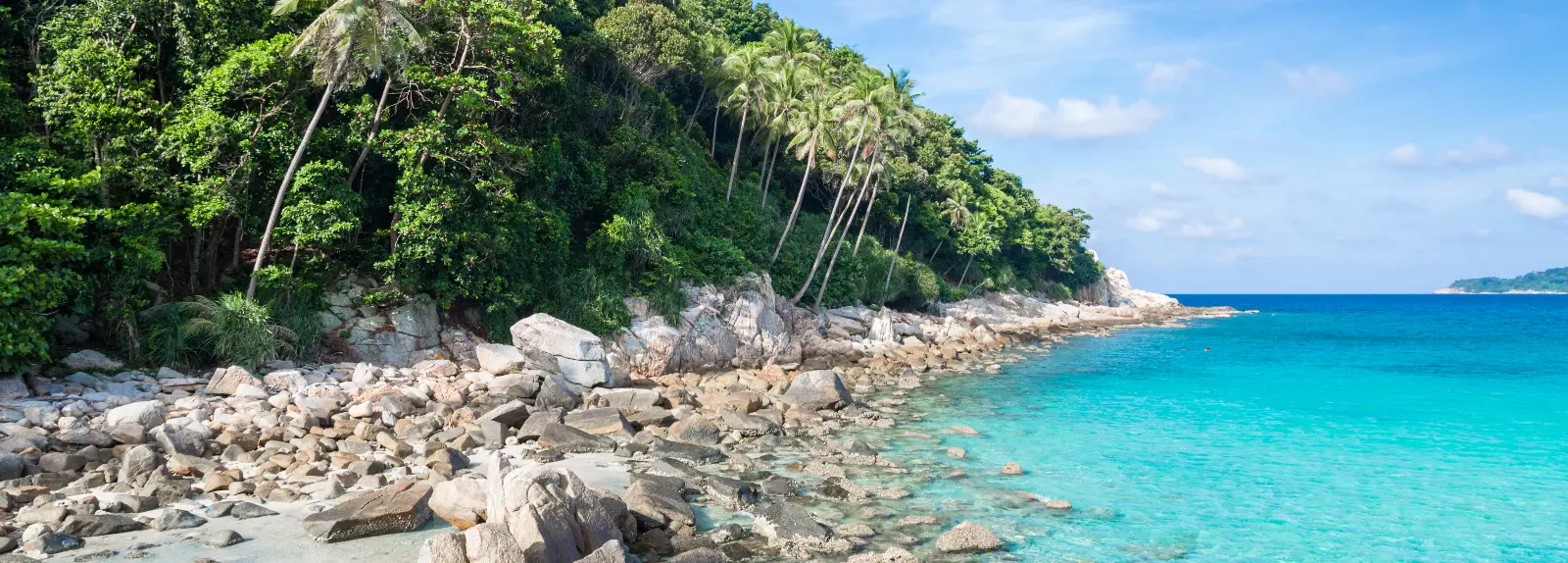
Located approximately 21km off the coast of Terengganu, Pulau Perhentian—meaning "stopover island"—is a premier destination within the Terengganu Marine Park. The archipelago consists of two main islands: Pulau Perhentian Besar (Great Perhentian) and Pulau Perhentian Kecil (Small Perhentian). Fringed by vibrant coral reefs and covered in dense coastal rainforest, these islands offer a critical sanctuary for marine life and migratory birds.
MARINE BIODIVERSITY & SNORKELING
The waters surrounding the Perhentian islands are gazetted as a Marine Park, ensuring the protection of its fragile coral ecosystems and diverse marine species.
- Coral Reefs: The islands are surrounded by extensive fringing reefs. Popular snorkeling sites such as Shark Point and Turtle Point offer reliable sightings of Black-tip Reef Sharks and Green Sea Turtles.
- Scuba Diving: Known for excellent underwater visibility, the area features diverse dive sites ranging from shallow coral gardens to deeper pinnacles and wrecks, suitable for all certification levels.
- Turtle Conservation: Perhentian is a significant nesting ground for sea turtles. Local conservation initiatives focus on beach protection and egg relocation to ensure the survival of these endangered species.
ISLAND EXPLORATION
- Pulau Perhentian Kecil: Known for its vibrant atmosphere and scenic beaches like Long Beach. It is the preferred choice for those seeking a more social and budget-friendly island experience.
- Pulau Perhentian Besar: Generally more developed and tranquil, offering a range of mid-to-high-end resorts suitable for families and travelers seeking a quieter retreat.
- Jungle Trekking: Both islands feature interior trails through primary coastal forest, providing opportunities to spot monitor lizards, dusky leaf monkeys, and various tropical bird species.
PRACTICAL INFORMATION
- Access: The primary gateway is the fishing town of Kuala Besut. From the Kuala Besut Jetty, speedboats take approximately 30 to 45 minutes to reach the islands.
- Seasonal Window: Due to the Northeast Monsoon, the islands are effectively closed from November to February. The best time to visit is between March and October when sea conditions are calm.
- Marine Park Fee: Visitors are required to pay a mandatory conservation fee at the jetty, which contributes to the management and protection of the marine environment.
Experience Malaysia’s Premier Nature Destinations
Langkawi Signature Nature Tours:
Planning a visit to the Jewel of Kedah? Explore Southeast Asia’s first UNESCO Global Geopark with the archipelago's leading naturalists. From rainforest treks to ethical mangrove boat safaris, we provide world-class field interpretation.
Explore Tours: Langkawi Nature Expeditions
General Reservations & Inquiries:
Hotline (WhatsApp): +60 19 225 2300
Email: junglewalla@gmail.com
Corporate & Media:
Azri Hussein (Operational Manager)
WhatsApp: +60 19 592 2300