
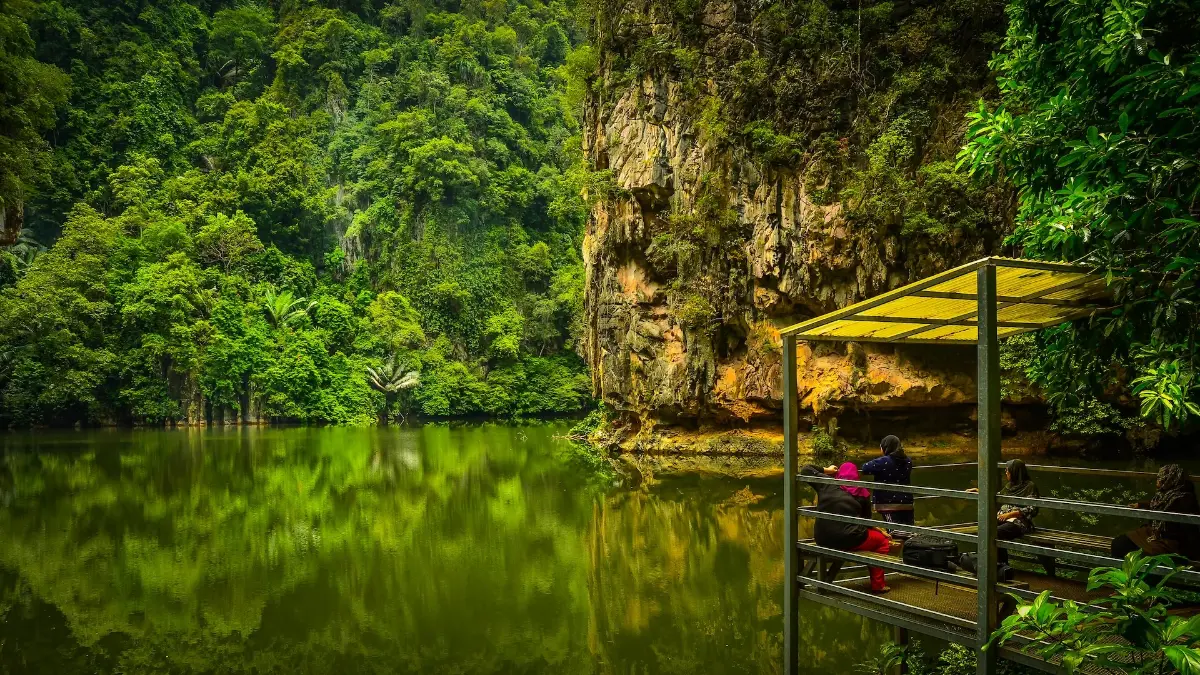
Ipoh, the capital of Perak, is situated within the Kinta Valley, once the world’s most productive tin-mining region. Geologically, the city is defined by its spectacular karst landscape—massive limestone outcrops and hidden cave systems that date back over 250 million years. Beyond its colonial architecture, Ipoh serves as a gateway to the unique biodiversity of Malaysia’s inland karst formations.
GEOLOGY & KARST ECOLOGY
The limestone hills surrounding Ipoh are part of a massive karstic formation, providing a specialized habitat for endemic flora and fauna adapted to high-alkaline environments.- Endemic Flora: The limestone cliffs are home to rare species of begonias, paraboeas, and specialized calciphile plants that are found nowhere else in the world.
- Cave Ecosystems: Ipoh’s extensive cave systems, such as those at Gunung Rapat and Gunung Tasek, host unique subterranean biodiversity, including specialized cave insects and large colonies of fruit and insectivorous bats.
- Gunung Lang Recreational Park: A managed park featuring a central lake surrounded by dramatic limestone towers, offering a look at the interaction between the valley's water systems and its geological formations.
CAVE TEMPLES & HERITAGE
The integration of cultural sites within the natural karst landscape is a hallmark of Ipoh’s heritage.- Perak Tong: Known for its 12.8m-high sitting Buddha, the temple interior leads to a steep climb that opens onto a ledge, providing a panoramic view of the Kinta Valley’s limestone topography.
- Sam Poh Tong: One of the oldest cave temples in Malaysia, featuring impressive stalactites and stalagmites integrated with Buddhist iconography and an ornamental tortoise pond in its inner courtyard.
- Kek Lok Tong: Notable for its massive, well-lit cavern and a peaceful garden situated behind the limestone massif, showcasing the sheer scale of the region's geological hollows.
COLONIAL ARCHITECTURE & HISTORY
- Ipoh Railway Station: Often called the "Taj Mahal of Ipoh," this Edwardian-style building reflects the immense wealth generated during the tin-mining era.
- Kellie’s Castle: Located 40km south in Batu Gajah, this unfinished 1915 mansion is a testament to the early 20th-century colonial ambition and the rubber industry's history in Perak.
- Darul Ridzuan Museum: Chronicling the development of the Kinta District, with collections focused on the mining and forestry industries that shaped the state’s economy.
PRACTICAL INFORMATION
- Access: Ipoh is centrally located along the North-South Expressway, approximately 2 hours from both Kuala Lumpur and Penang. The ETS (Electric Train Service) provides frequent and efficient links to major cities.
- Climate: Like the rest of the peninsula, Ipoh has a tropical climate. The city is famous for its mountain-filtered water, which locals claim enhances the quality of its culinary offerings.
- Geological Museum: For a deeper dive into the region’s mineral wealth, the Geological Museum houses over 600 mineral samples and fossils, documenting the valley's prehistoric past.
Experience Malaysia’s Premier Nature Destinations
Langkawi Signature Nature Tours:
Planning a visit to the Jewel of Kedah? Explore Southeast Asia’s first UNESCO Global Geopark with the archipelago's leading naturalists. From rainforest treks to ethical mangrove boat safaris, we provide world-class field interpretation.
Explore Tours: Langkawi Nature Expeditions
General Reservations & Inquiries:
Hotline (WhatsApp): +60 19 225 2300
Email: junglewalla@gmail.com
Corporate & Media:
Azri Hussein (Operational Manager)
WhatsApp: +60 19 592 2300