
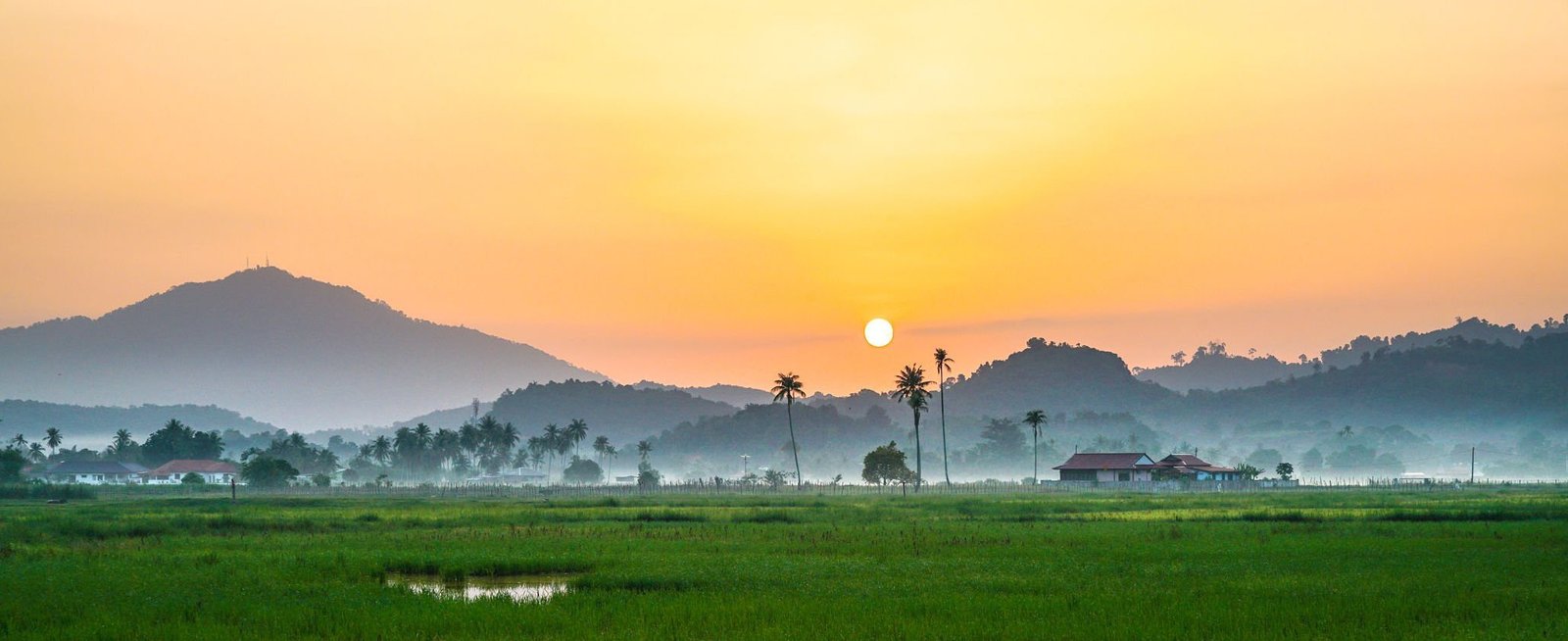
Kedah is one of Malaysia’s most ancient states, characterized by vast alluvial plains dedicated to paddy cultivation and the dramatic limestone and granite peaks that punctuate its landscape. As the "Rice Bowl of Malaysia," Kedah’s ecology is defined by its extensive irrigation systems, seasonal wetlands, and the rugged forests of the northern border.
GEOLOGICAL & LANDSCAPE HIGHLIGHTS
- The Paddy Plains: A significant human-modified ecosystem that serves as a seasonal habitat for diverse waterbirds and raptors. The vast "Sea of Paddy" reflects the state's agricultural heritage and its importance to national food security.
- Gunung Jerai: A massive limestone and granite massif rising 1,217 meters from the plains. Its isolation has created a unique microclimate where lowland dipterocarp forest transitions rapidly into montane flora, including wild orchids and pitcher plants.
- Ulu Muda Forest Reserve: A critical water catchment area for northern Malaysia. This remote wilderness is one of the few places in the country where rare megafauna, including the Asian Elephant and several hornbill species, can be found in a primary rainforest setting.
ARCHAEOLOGICAL & MARITIME HERITAGE
- Bujang Valley (Lembah Bujang): Located at the foothills of Gunung Jerai, this area contains the remnants of a Hindu-Buddhist civilization dating back over 2,000 years. It stands as a testament to Kedah's role as a major maritime trading hub in the ancient world.
- Alor Setar: The state capital features well-preserved heritage architecture, including the Zahir Mosque—one of the oldest and most beautiful mosques in Malaysia—and the Balai Besar, which reflects the state's royal history.
PRACTICAL INFORMATION
- Access: Kedah is well-connected by the North-South Expressway. Alor Setar Airport (AOR) provides domestic links, while the ETS train service offers efficient travel to major towns like Gurun and Sungai Petani.
- Langkawi Connection: As the gateway to the Langkawi archipelago, regular ferry services operate from the coastal towns of Kuala Kedah and Kuala Perlis (in neighboring Perlis).
- Climate: The state experiences a distinct dry season from December to March, which is the best time for photography across the paddy fields and for trekking in the forest reserves.
Experience Malaysia’s Premier Nature Destinations
Langkawi Signature Nature Tours:
Planning a visit to the Jewel of Kedah? Explore Southeast Asia’s first UNESCO Global Geopark with the archipelago's leading naturalists. From rainforest treks to ethical mangrove boat safaris, we provide world-class field interpretation.
Explore Tours: Langkawi Nature Expeditions
General Reservations & Inquiries:
Hotline (WhatsApp): +60 19 225 2300
Email: junglewalla@gmail.com
Corporate & Media:
Azri Hussein (Operational Manager)
WhatsApp: +60 19 592 2300