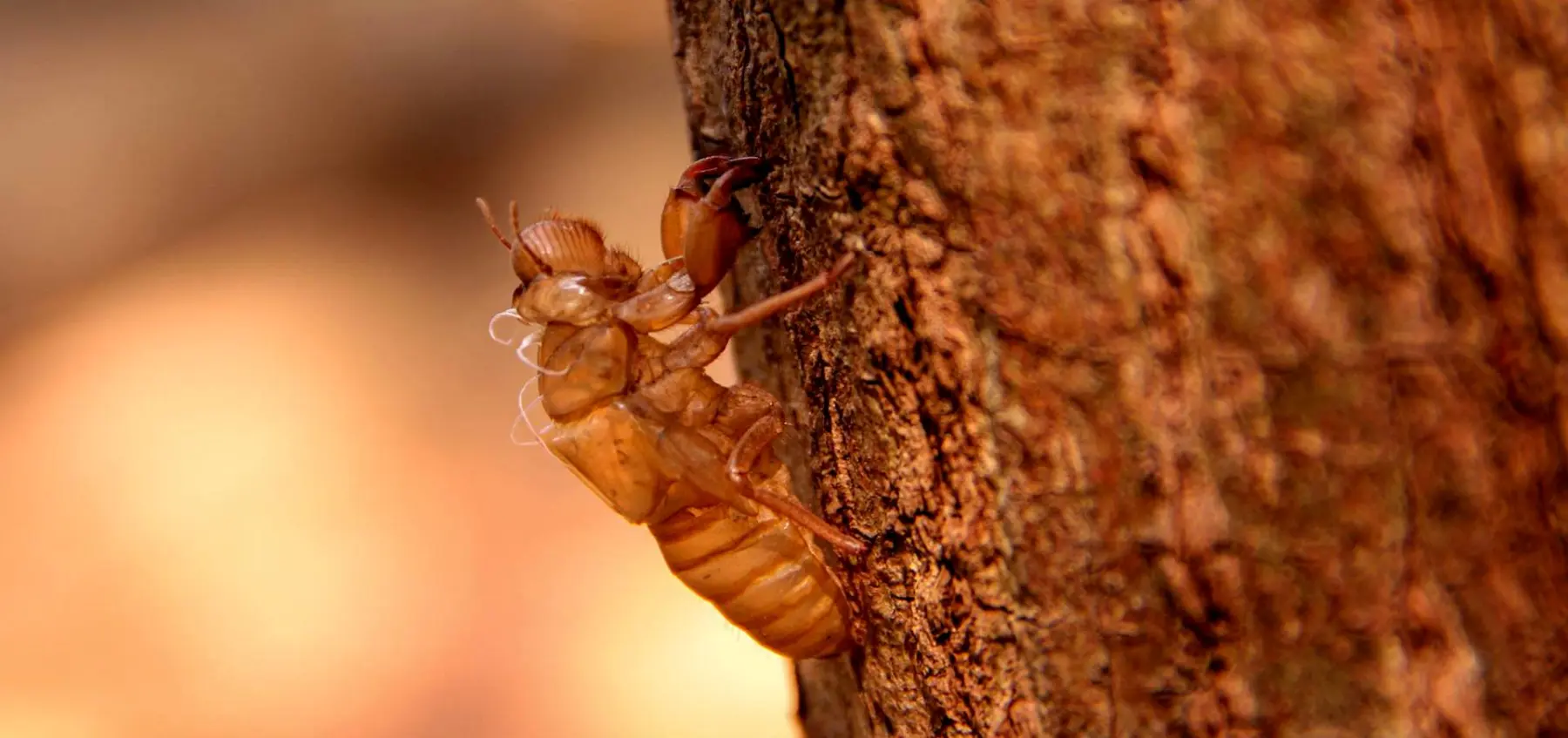
The empty, amber-colored shells found clinging to tree trunks in Langkawi’s rainforests are the discarded exoskeletons of cicadas. These remnants, known as exuviae, mark a critical transition in the life cycle of these insects—from a subterranean nymph to a winged, acoustic adult. This process of shedding the old skin is called ecdysis.
THE BIOLOGY OF EXOSKELETONS
Unlike mammals, insects have an external skeleton (exoskeleton) made of chitin. While this provides protection and structural support, it does not grow with the insect, necessitating a series of sheds.
- Structural Integrity: The exoskeleton is a marvel of biological engineering, providing a rigid framework for muscle attachment while remaining light enough for flight.
- The Shedding Process: When a nymph is ready to mature, it emerges from the soil and climbs a vertical surface. The exoskeleton splits along the dorsal midline, allowing the soft-bodied adult to crawl out, expand its wings, and harden its new cuticle.
- Protective Shield: Even after the insect has departed, the exuviae remain remarkably intact, often retaining the intricate structures of the legs, antennae, and even the respiratory tubes (tracheae).
THE SOUND OF THE RAINFOREST
In Langkawi, the presence of these exoskeletons is often accompanied by the deafening "song" of the males, produced by specialized organs called tymbals.
- Species Diversity: Malaysia is home to over 200 species of cicadas, each with a distinct acoustic signature. Some species synchronize their emergence in massive numbers to overwhelm predators.
- Subterranean Life: Before leaving their shells behind, cicada nymphs spend years underground—some species up to 17 years elsewhere, though tropical species have shorter, less documented cycles—feeding on the sap from tree roots.
OBSERVATION IN THE FIELD
During our Rainforest Awakening treks, these exoskeletons serve as excellent educational tools to discuss insect physiology and the hidden cycles of the forest floor. They are most commonly found during the transition between dry and wet seasons when many species emerge to breed.
DISCOVER THE HIDDEN LIFE OF THE RAINFOREST
Join JungleWalla’s professional naturalists to uncover the complex biological stories of the Langkawi UNESCO Global Geopark. From ancient insects to majestic hornbills, we bring the forest to life through expert storytelling and ethical observation.
Featured Rainforest Expeditions:
- Daytime Exploration: Machincang Rainforest Trekking
- Nocturnal Discovery: Langkawi Rainforest After Dark
General Inquiries & Bookings:
Email: junglewalla@gmail.com
WhatsApp Hotline: +60 19 225 2300