
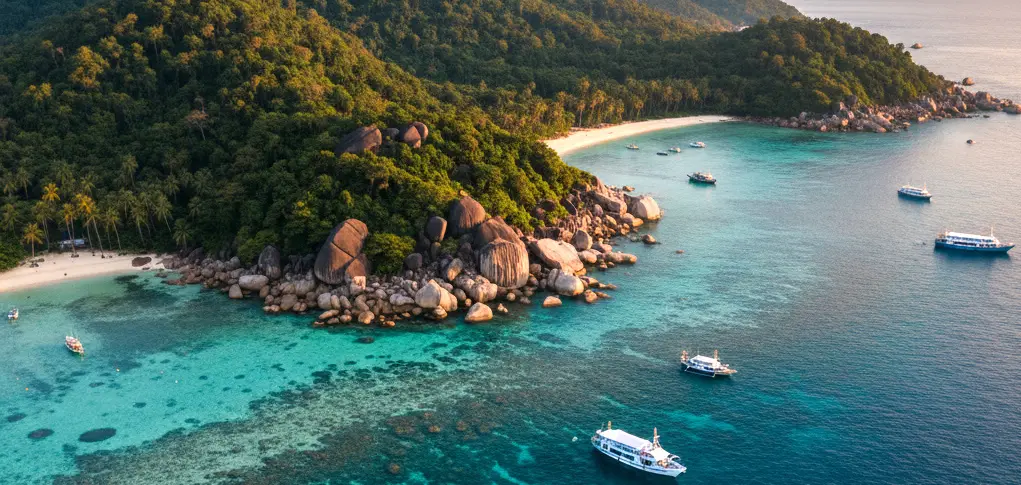
Located approximately 65 kilometers east of Mersing, Johor, Pulau Aur is one of Malaysia’s most remote and pristine offshore islands. Part of the Johor Marine Park, it is renowned for its crystal-clear waters and deep-sea topography, making it a premier destination for serious divers and those seeking an escape from the more commercialized island circuits.
MARINE BIODIVERSITY & DIVING
Pulau Aur’s distance from the mainland ensures exceptional visibility and a high concentration of pelagic species. The island, along with its neighbor Pulau Dayang, offers some of the most challenging and rewarding dive sites in the South China Sea.
- Rayner’s Rock: Located off the northeastern tip of Pulau Dayang, this large submerged boulder features a mix of hard and soft corals. It is a haven for schooling yellowtails, rainbow runners, and various trevally species.
- The Pinnacles: A submerged reef south of Pulau Aur. Starting at 12 meters and plunging beyond 25 meters, this site is ideal for observing large pelagics, including barracudas, jacks, and black-tip reef sharks.
- Pelagic Action: Due to its deep-water location, the island frequently attracts larger marine life, including occasional sightings of manta rays and whale sharks during the migration seasons.
REMOTE ISLAND EXPERIENCE
- Rugged Topography: The island is characterized by steep rocky cliffs and lush interior rainforests. There are no roads; movement between the small kampungs is primarily done by boat or via jungle trails.
- Yachting & Sport Fishing: The calm channel between Pulau Aur and Pulau Dayang is a popular anchorage for private yachts. Outside the Marine Park boundaries, the surrounding waters are also known for sustainable sport fishing (Marlin and Sailfish).
PRACTICAL INFORMATION
- Access: Reached via ferry or private charter from Mersing Jetty or Tanjung Leman. The journey takes approximately 4 to 5 hours depending on sea conditions. Many operators depart late at night to arrive at the island by dawn.
- Seasonal Window: The island is strictly seasonal, accessible only from March to October. It is closed during the Northeast Monsoon (November to February) when sea conditions become hazardous.
- Facilities: Accommodations are rustic and focused on diving enthusiasts. Electricity is often provided by generators, and mobile connectivity is limited, offering a true "off-the-grid" experience.
Experience Malaysia’s Premier Nature Destinations
Langkawi Signature Nature Tours:
Planning a visit to the Jewel of Kedah? Explore Southeast Asia’s first UNESCO Global Geopark with the archipelago's leading naturalists. From rainforest treks to ethical mangrove boat safaris, we provide world-class field interpretation.
Explore Tours: Langkawi Nature Expeditions
General Reservations & Inquiries:
Hotline (WhatsApp): +60 19 225 2300
Email: junglewalla@gmail.com
Corporate & Media:
Azri Hussein (Operational Manager)
WhatsApp: +60 19 592 2300